BUILD, build a business you controlGet the excerpt

Let's start building.Get the free excerpt of the book.

Kathryn's Wall Street Journal bestseller opens by answering the question most people are actually stuck on, which is not what to build but what to do first. It's the chapter readers tell her they go back to, and it's yours free.

Where should I send it?

Name and email, then the download unlocks right here.

You'll also get Build the Damn Thing, Kathryn's weekly newsletter. Unsubscribe any time, the excerpt is yours either way.

The full Prologue and Introduction · No card · Nothing to cancel

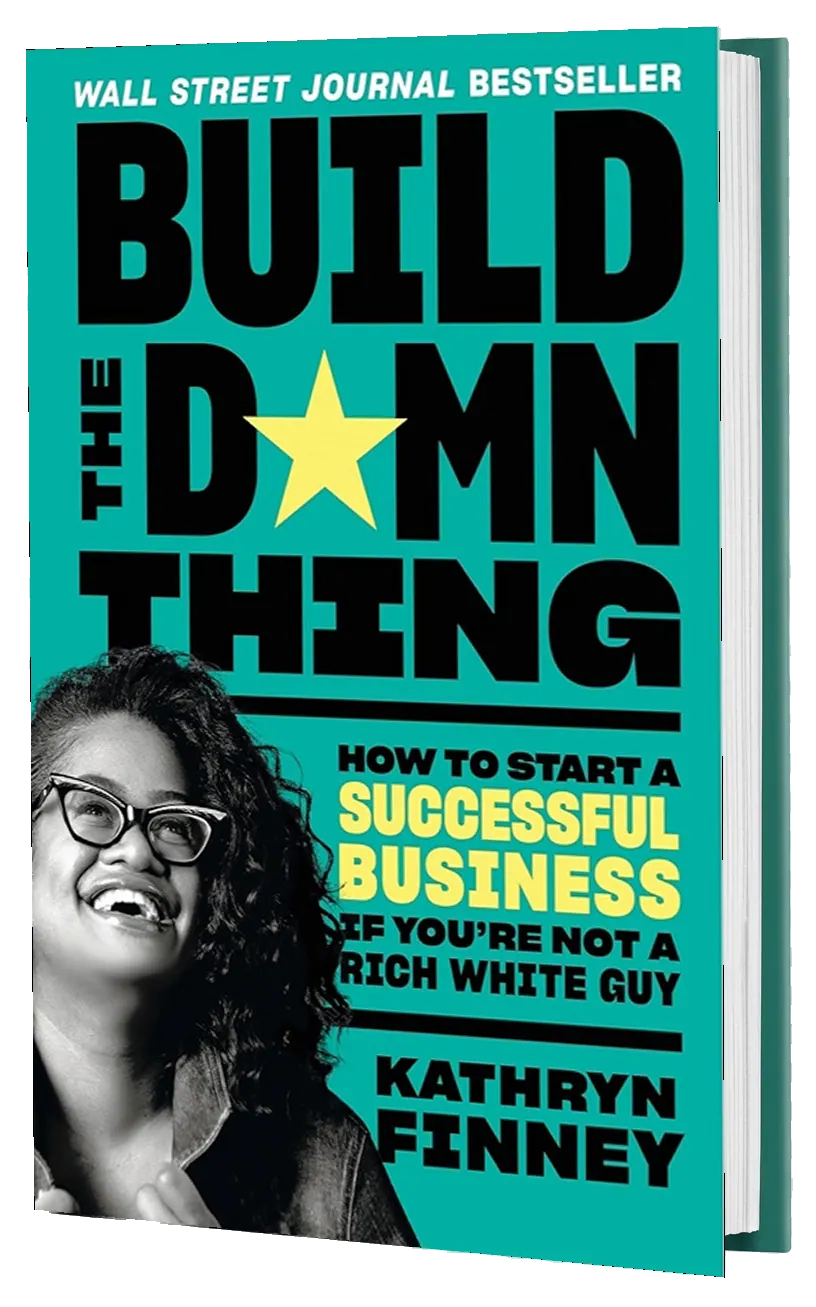
The book Build the Damn Thing by Kathryn Finney, shown as a 3D coverWall Street Journal bestseller seal
FREE EXCERPT NO CARD NOTHING TO CANCEL YOURS TO KEEP STRAIGHT TO YOUR INBOX FREE EXCERPT NO CARD NOTHING TO CANCEL YOURS TO KEEP STRAIGHT TO YOUR INBOX FREE EXCERPT NO CARD NOTHING TO CANCEL YOURS TO KEEP STRAIGHT TO YOUR INBOX

You might have seen Kathryn on

The New York Times
Fortune
Fast Company
Inc.
Business Insider
Entrepreneur
Wired
Wall Street Journal bestselling author

Don't wait for the system to let you in.Break down the door and build your damn thing.

The first line of the book

How many times have you read business advice that was true,except for you?

That's the question the book opens with, and it's the reason the book exists. You've read the advice. Get the warm intro. Tap your network. Raise a friends-and-family round. Every step assumes a version of your life that isn't the one you have.

So you did what people do. You opened a doc. You gave the thing a name that's fine for now. You wrote down 40 things that need to happen, and then you looked at the 40 things and could not tell which one was first.

And you already know the routine by heart. Research the market, validate the idea, write the plan, pick the name, build the brand, find the funding, then launch.

Seven steps, and not one of them is small enough to start today. That isn't a motivation problem. Almost every book on the shelf tells you what to build. Very few of them were written for someone starting where you're starting.

Free · No card · Nothing to cancel

What the waiting costs

The list keeps getting longer.That's further from a decision, not closer.

The cost doesn't show up as money, not at first. It shows up as the version of the idea you had in March, the one you would have put in front of a real person by now.

And the doc keeps growing, because adding to it feels like doing something. It isn't.

You're not behind because you're slow. You're stuck because nobody handed you the first move.

From the Prologue

She had the pitch, the numbers, and the audience.It didn't matter.

By 2009 Kathryn had turned a love of discount shopping into The Budget Fashionista, a seven-figure media business, with a monthly spot on the TODAY show and six-figure endorsement deals from companies like TJ Maxx and Tide. Then she joined a startup incubator in New York, carrying an idea for a beauty subscription business, built on the 1.1 million weekly visitors she already had.

She gave the elevator pitch to a room of 70 people. She brought the market size, the tech stack, and the audience she already owned. She landed it with 10 seconds to spare. Scott Heiferman, the founder of Meetup, told her it was one of the best elevator pitches he had ever heard.

Then the rest of the room got its turn. One of them said the business model was excellent, and then explained why he would not back her anyway. Someone else decided she was too well off to understand her own customers, on the evidence that she had an accountant. Another asked whether women online were a "real" customer base.

So she took it upstairs, to the founder of the incubator, and sat in what she calls the Aeron chair, the required chair of failed startups. He said, "Great idea, and obviously you can do this." Then he leaned forward and told her, honestly, that he could not name a single investor who had ever backed someone like her, so she probably would not get funded. Then he stood up and said "keep me posted," which in startup speak means don't call me.

She built her own damn thing instead, sold The Budget Fashionista in 2012, then founded digitalundivided, then Genius Guild. The excerpt is where she explains what she worked out in between, starting with the part nobody had told her:

Think of entrepreneurship like a video game where everyone starts out on a different level. The goal is always the same: to grow your company quickly and sell it for as much as possible. And on the surface, the rules of the game seem perfectly fair.

But not everyone has the same chance of winning, because we all begin the game from very different places. Some gamers get to start out on the easy levels and are given thicker armor, special weapons, and unlimited ammo. I call these people the Entitleds. Others are forced to start on an advanced level with no armor, no special weapons, and no extra lives. I call them the Builders.

Kathryn Finney, from the Introduction

The Introduction takes that apart level by level, and it does not flinch about who is playing on which one. It also makes the point the rest of the book is built on: none of the 30-plus books on entrepreneurship Kathryn had read contained a single example of a successful startup led by someone outside the usual mold. The industry that sells out-of-the-box thinking could not name a single person whose existence was out of the box.

Then it gets practical, which is the part people don't expect from an introduction.

After you read it

One first move, small enough to do this week.And a reason it's first.

Not 40 things ranked by a system you'll abandon by Thursday. One move you can say out loud to somebody who asks what you're working on.

You'll also stop taking the standard advice personally, which sounds like a small thing and isn't. Once you can see who a piece of advice was written for, you can tell in about a paragraph whether it applies to you. You stop buying the ones that don't.

Every course promises a shortcut. Every guru has a framework named after themselves. Every free masterclass ends in an upsell. This is the real text of a book that Portfolio printed and put in stores. You read it, you keep it, and nothing has been held back for a version that costs money.

What's actually in the excerpt

  • The whole Prologue.

    The incubator, the pitch to 70 people, the Aeron chair, and the sentence that made her stop asking permission.

  • The whole Introduction.

    The video game, the Entitleds, the Builders, and why the level you start on is not a metaphor.

  • What a startup actually is.

    A plain definition, the real difference between a small business and a startup, and why the line between them is yours to move.

  • Why you already have more than you think.

    The resources Builders don't count as resources, and the Builder Trap that comes with them.

29 pages · The complete Prologue and Introduction · PDF

Build the Damn Thing by Kathryn Finney, hardcoverWall Street Journal bestseller seal
And if you want the rest

The excerpt is the on-ramp.The book is the how-to manual.

Kathryn describes the full book as a step by step manual for Builders turning an idea into a company. It runs Step 1 through Step 6, from the idea to your first product to raising your first million dollars in investment, and it's built to be dipped into rather than read front to back.

Along the way there are Tools, which are exercises, some practical like figuring out your exit number, some harder like facing your fears. And there are Builder Traps, the roadblocks she wants you to see coming.

  • Step 2, from the idea to the problem.

    Whether your brilliant idea is an actual business, including the Ugly Baby test for checking it for under $100.

  • Step 4, from product market fit to team.

    Hiring your first employee, and how to know you're ready to.

  • Step 6, from team to funding.

    Crowdfunding, venture capital, and what the hell a cap table is.

272 pages, published by Portfolio at Penguin Random House, with a foreword by Guy Kawasaki. A Wall Street Journal bestseller, featured in Bloomberg, Fast Company, Masters of Scale, the Motley Fool, and Marketplace.

See the whole book
Praise for the book

What people saidabout the rest of it.

Guy Kawasaki

"Kathryn represents the kind of leadership, courage, and ovaries that the future demands."

She's an investor and entrepreneur who's kicking ass and denting the universe. She doesn't give a shit about playing by the rules of the current elite and status quo. And this is what it takes to build great companies, organizations, and institutions, that break barriers in this post pandemic, post science, post truth world.

Guy Kawasaki, bestselling author of Art of the Start and Chief Evangelist of Canva

Kim Scott

"Indispensable advice for entrepreneurs."

Kathryn Finney will show you how to cut through the bias, prejudice and bullying too often disguised as 'feedback' from entitled investors who pretend to be looking for innovation but who are in fact just matching obsolete patterns.

Kim Scott, author of Radical Candor and Just Work

Steve Case

"Kathryn was one of the first innovators to shed light on the importance of leveling the playing field."

For far too long, the venture capital industry has not done enough to fund and support underrepresented entrepreneurs. Her book is a critically important roadmap for founders on their journey to launch and grow a 'built to last' company.

Steve Case, Chairman and CEO of Revolution, Co-Founder of AOL

"Laser-focused on encouraging people who don't fit the mold."

Reid Hoffman, host of Masters of Scale, co-founder of LinkedIn

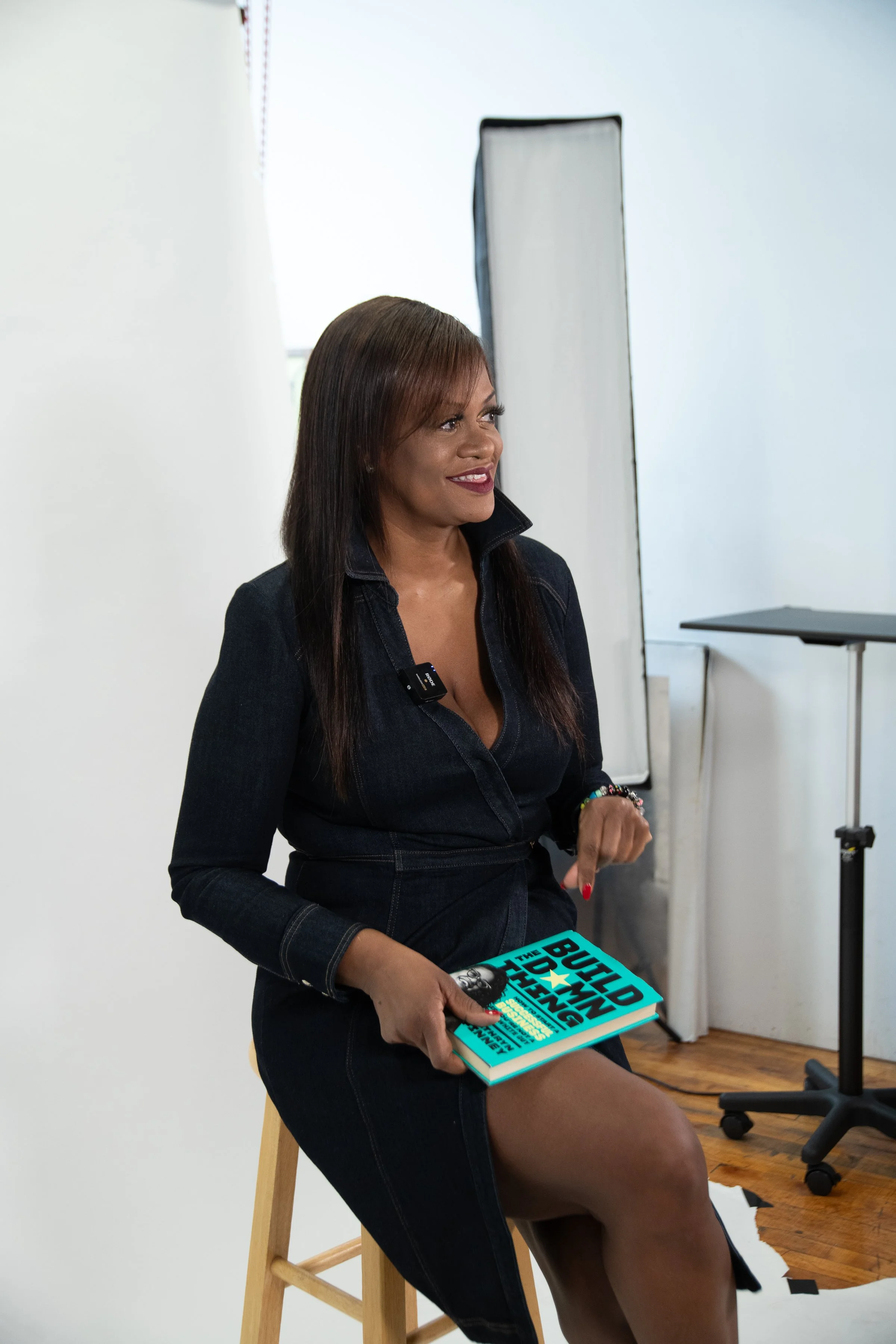
Kathryn Finney holding a copy of Build the Damn Thing
Who wrote it

Kathryn has donethe thing she's writing about.

Kathryn Finney is a Wall Street Journal bestselling author, an investor in over 100 companies, and a serial founder who has built and scaled several companies from idea to exit.

She trained as an epidemiologist at Yale, then founded The Budget Fashionista, grew it into a seven-figure media business, and sold it in 2012. She was CEO of digitalundivided, the social enterprise that pushed the venture industry to look hard at who it actually funds, and she runs Genius Guild today.

Through The Doonie Fund she has made $250,000 in micro-investments in more than 3,000 small businesses. She wrote Build the Damn Thing because nobody had written the version she needed.

The offer, plainly

Free means free.Here's the whole of it.

  • The complete Prologue and the complete Introduction, the real text from the book, not a summary.
  • 29 pages, as a PDF, so you can read it on your phone whenever you get 20 minutes.
  • No card, no trial, and nothing to cancel.
  • Plus Build the Damn Thing, Kathryn's weekly newsletter, which you can leave any time.

Is it really free?

Yes. The excerpt is free and there is no card, no trial, and nothing to cancel.

Is this the whole book?

No. It's the Prologue and the Introduction in full. All 272 pages are available wherever books are sold, and the link is above.

Do I have to join BUILD?

No. The excerpt stands alone, and nothing on this page asks you to pay for anything.

What happens to my email?

It gets you the download, and then Kathryn's weekly newsletter. One unsubscribe link at the bottom of every one, and it works.

Get the excerpt

Tell me where to send it.Then go read it.

You put in your name and email, the download unlocks on this page straight away, and the PDF is yours to keep.

Where should I send it?

Name and email, then the download unlocks right here.

You'll also get Build the Damn Thing, Kathryn's weekly newsletter. Unsubscribe any time, the excerpt is yours either way.

Now go build the damn thing. You got this.

Kathryn Finney

Kathryn Finney

Founder of BUILD, author of Build the Damn Thing

When you're ready to build it

BUILD is where you do the thing the excerpt tells you to do.

The excerpt gives you the first move. BUILD gives you the tools to make it, and a room full of Builders doing the same. The founder rate is $49 a month for the first 100 founders, locked for your first year. It's a new platform, and most people in it right now are exactly where you are.

Become a founding member

A free excerpt of the book

No card, nothing to cancel.