

You've been thinking about starting a business for months (maybe years). You've watched every Gary Vee video, read every Medium article, listened to every podcast.
But you still haven't started.
Why?
Because every piece of advice out there assumes you already know what you're doing. Or it's so vague ("follow your passion!") that it's useless. Or it's from Entitleds who started with $100K from their parents and act like bootstrapping means buying the cheaper Tesla.
That ends today.
I'm going to give you the exact roadmap I wish I had when I started The Budget Fashionista in 2003. No fluff. No theory. Just the practical, tactical, step-by-step process to go from "I think I want to start a business" to "I'm a founder with paying customers."
This is your starting line. Let's go.
First, Let's Talk About Fear
You're scared. That's normal.
You're scared you'll fail. You're scared you'll look stupid. You're scared you'll lose money. You're scared you'll disappoint people who depend on you.
Good. That means you're taking this seriously.
But here's what you need to understand: The most expensive business mistake isn't failure. It's never starting.
Think about it:
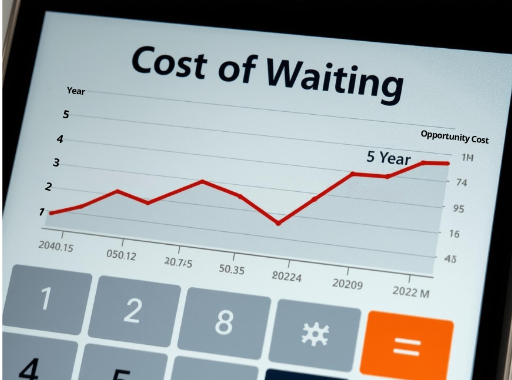
Every year you don't start is a year of missed income
Every year you don't start is a year someone else captures your market
Every year you don't start is a year you're building someone else's dream instead of yours
The real risk isn't starting. It's waiting.
I built my first business while working full-time as an epidemiologist. I had student loans, a mortgage, and zero safety net. If I could do it in 2003 with none of the tools you have today, you can absolutely do this.
The Brutal Truth About First-Time Entrepreneurship
Before we dive into the how, let's be clear about what you're signing up for:
Entrepreneurship is:
Harder than you think
More rewarding than you imagine
Lonelier than you expect
More expensive than you planned
Worth every bit of struggle
Entrepreneurship is NOT:
A get-rich-quick scheme
Passive income (at first)
A way to avoid working hard
Suitable for everyone
80% of new businesses fail in the first year.
But you know what? 80% of new businesses also don't follow the framework I'm about to give you. They skip validation. They overbuild. They run out of money before they find customers.
You won't do that. Because you're going to follow the system.
The 6-Phase First-Time Founder Framework
I've built three successful companies. I've invested in hundreds more. I've seen what works and what doesn't.
Here's the framework that gives first-time entrepreneurs the best shot at success:
Phase 1: Get Your Mind Right (Week 1)
Phase 2: BUILD Your MVP (Week 2)
Phase 3: Validate Quickly (Weeks 3-4)
Phase 4: Get Your First Customer (Week 7)
Phase 5: Iterate and Improve (Weeks 8-12)
Phase 6: Scale Strategically (Month 4+)
Let's break down each phase.
Phase 1: Get Your Mind Right (Week 1)
Goal: Build your internal foundation before you build your business
Most first-time founders skip this. Don't.
Action Items:
1. Define Your Core Values
Write down 3-5 principles that guide your life:
What matters most to you?
What lines won't you cross?
What legacy do you want to leave?
Why it matters: Your business will test your values. Know them before the tests come.
2. Write Your Personal Mission Statement
One sentence: "I am a [your identity] who helps [who you serve] achieve [what outcome]."
Example: "I am a creative entrepreneur who helps first-time founders launch profitable businesses without going broke."
3. Calculate Your Exit Number
This is the monthly income your business needs to generate for you to go full-time.
Formula:
Monthly expenses (basic): $_______
+ Monthly debt payments: $_______
+ Monthly savings goal: $_______
+ Monthly taxes (30%): $_______
= Your Exit Number: $_______
Use ideabuild.ai to calculate this precisely and get a roadmap to reach it.
4. Do Your SWOT Analysis
Strengths: What are you naturally good at?
Weaknesses: What do you struggle with?
Opportunities: What advantages do you have?
Threats: What challenges will you face?
Be brutally honest. This isn't the time for ego.
5. Build Your Personal Advisory Board
Identify 3-5 people who will support you:
The BS Meter (calls you on your crap)
The Motivator (keeps you going)
The Listener (lets you vent)
The Expert (knows your industry)
The Comedian (makes you laugh)
These people are your lifeline when things get hard.
Phase 2: BUILD Your MVP (Week 2)
Goal: BUILD your initial product/service
Phase 3: Validate Quickly (Weeks 3-4)
Goal: Prove people will actually pay for your solution BEFORE you build it
This is the phase most first-time founders skip. Don't skip it.
Week 3: Research
Day 1-2: Search Trend Analysis
Google Trends: Are people searching for your solution?
Look for consistent or growing interest (not declining)
Day 3-4: Competition Research
Find 5-10 competitors
What do they charge?
What do customers complain about in reviews?
What gaps can you fill?
Day 5-6: Customer Interviews
Talk to 20 potential customers
Ask about their problems (not your solution)
Ask what they currently pay for solutions
Ask what would make them switch
Day 7: Decide
Is this worth pursuing?
Do people have this problem?
Are they paying for solutions?
Can you do it better/cheaper/different?
Week 4: Test
Build Landing Page:
Use lovable.dev or replit or Google Sites (free)
Headline: The outcome you create
3-5 bullet points: Benefits
Email capture: "Join the waitlist"
One CTA: "Reserve your spot"
Run $50 Test:
Facebook or Google ads
Target your specific audience
Drive traffic to landing page
Measure: clicks, emails, engagement
Success Metrics:
1%+ click-through rate on ads
10%+ email signup rate on landing page
People asking "when can I buy?"
If you hit these numbers, PROCEED. If not, PIVOT.
Phase 4: Build Your MVP (Weeks 5-6)
Goal: Create the simplest version that proves your concept
Remember: Your MVP should be slightly embarrassing. If you're proud of it, you waited too long to launch.
The $100 MVP Rule:
Spend no more than $100 on your first version.
For Service Businesses:
Google Doc with your process
Calendly for scheduling
Zoom for delivery
Stripe for payment Total: $0-20
For Product Businesses:
Use mvpbuild.ai to rapidly prototype
Focus on ONE core feature
Manual processes are fine (you can automate later) Total: $50-100
For Content/Media:
Simple website (lovable, replit, Google sites)
Email list (Mailchimp free tier)
Social media (free)
First 5 pieces of content Total: $25-50
The Two-Week MVP Sprint:
Week 5:
Days 1-2: Plan your minimum feature set
Days 3-5: Build core functionality
Days 6-7: Test it yourself, fix obvious bugs
Week 6:
Days 1-3: Get 10 people to test it
Days 4-5: Fix critical issues only
Days 6-7: Prepare for launch
Launch criteria:
Does it solve the core problem?
Can someone actually buy it?
Does it work 80% of the time?
If yes to all three, you're ready to launch.
Phase 5: Get Your First Customer (Week 7)
Goal: Money in the bank from someone who isn't your mom
This is where dreams become businesses.
The First Customer Playbook:
Day 1-2: The List
Make a list of 50 potential first customers:
15 people you know personally
15 people in your network (2nd degree)
10 people in relevant communities
10 local businesses/people (if applicable)
Day 3: The Offer
Create your "First Customer Special":
50% off regular price
Limited to first 10 customers
Includes extra attention/support
In exchange for detailed feedback + testimonial
Day 4-5: The Outreach
Send personalized messages to all 50:
"Hey [Name],
I'm excited to share that I'm launching [Business Name] this week!
We help [target customer] achieve [specific outcome] by [how you do it].
I'm offering a special First Customer rate of $[price] (50% off) to the first 10 people who sign up this week. This includes [what's included] plus [bonus].
Interested? [Link to buy/book call]
Thanks for your support! [Your name]"
Day 6-7: Follow Up
Call the 10 most promising leads
Answer questions
Close the sale
Target: 3-5 first customers
If you get 1, you're in business. If you get 3+, you've validated product-market fit.
Phase 6: Iterate and Improve (Weeks 8-12)
Goal: Turn your MVP into a real product and get to 10 customers
The Build-Measure-Learn Loop:
Weeks 8-9: Deliver + Document
Serve your first customers exceptionally
Document everything that works
Document everything that breaks
Ask for detailed feedback
Weeks 10-11: Improve + Systematize
Fix the biggest problems
Make it 10% better (not 100% perfect)
Create simple systems for repeatable tasks
Raise your prices 25%
Week 12: Scale + Iterate
Reach out to 50 more people
Aim for 10 total customers
Get testimonials from happy customers
Calculate unit economics (what each customer is worth)
Key Metrics to Track:
Customer Acquisition Cost (CAC): How much does it cost to get one customer?
Lifetime Value (LTV): How much is one customer worth over their lifetime?
Goal: LTV should be 3X your CAC
Example:
Cost to acquire customer: $100
Customer pays: $500
LTV/CAC ratio: 5:1 ✓ Good!
Use ideabuild.ai analytics to track these automatically.
Phase 7: Scale Strategically (Month 4+)
Goal: Go from 10 customers to 100, then 1,000
You're no longer a first-time founder. You're a founder with a real business.
Now it's time to scale:
Month 4-6: Systematize
Document all processes
Create templates for everything
Set up automation where possible
Consider hiring your first contractor
Month 7-9: Market
Launch proper marketing campaigns
Build your content engine
Invest in paid advertising
Build strategic partnerships
Month 10-12: Scale
Hire your first employee
Raise prices again
Expand your offering
Consider raising capital (if needed)
Use the BUILD community:
ideabuild.ai: Strategy and validation
namebuild.ai: Naming new offerings
logobuild.ai: Professional branding at scale
mvpbuild.ai: Rapid product development
buildthedamnthing.com: Advanced frameworks
The First-Time Founder Mistakes to Avoid
Mistake #1: Perfection Paralysis
Your first version will suck. Launch anyway.
Mistake #2: Building in Isolation
Talk to customers constantly. Build with them, not for them.
Mistake #3: Underpricing
Charge what you're worth. You can always come down, hard to go up.
Mistake #4: Ignoring the Numbers
Know your metrics. Revenue, costs, runway, CAC, LTV.
Mistake #5: Quitting Too Soon
It takes 6-12 months to gain traction. Don't quit in month 3.
Mistake #6: Scaling Too Fast
Get to 10 customers before you scale to 100.
Mistake #7: Forgetting Your Why
Go back to your core values when things get hard.
The Reality of Year One
Let me be straight with you about what to expect:
Month 1-3: The Honeymoon
Excitement is high
Progress feels slow
Doubt creeps in
Month 4-6: The Grind
Reality sets in
Hard work required
Some traction visible
Month 7-9: The Breakthrough
Things start clicking
Systems working
Revenue growing
Month 10-12: The Foundation
Real business emerging
Consistent customers
Path to profitability clear
Most founders quit in months 4-6. Don't be most founders.
Your First-Time Founder Toolkit
Essential (Free-$50):
Google Suite: Free
Canva: Free tier
ChatGPT: Free tier
Worth Paying For ($50-150/month):
Paid email marketing (Mailchimp/ConvertKit)
Basic website hosting
Scale-Up Tools ($150-500/month):
CRM (HubSpot, Salesforce)
Advanced automation (Zapier paid)
Your 12-Week First-Time Founder Action Plan
Week 1: Get your mind right
Week 2: Find your idea
Weeks 3-4: Validate quickly
Weeks 5-6: Build your MVP
Week 7: Get first customer
Weeks 8-12: Iterate and get to 10 customers
12 weeks from today, you'll be a founder with a real business and paying customers.
You Got This
Starting a business as a first-time founder is scary.
But you know what's scarier?
Looking back in 5 years and realizing you never tried.
You have everything you need:
A system to follow (this one)
Tools to help you move fast (ideabuild.ai and the BUILD community)
A community of Builders who've been where you are
The resilience you've built from every hard thing you've overcome
The only thing you're missing is action.
Start today. Start with Week 1. Start with Phase 1.
The universe is conspiring for your greatness.
Now build the damn thing.
Ready to go from first-time thinker to first-time founder? Join BUILD Community TODAY and get your complete roadmap from idea to profitable business. AI-powered validation, step-by-step guidance, and access to the BUILD community: namebuild.ai, logobuild.ai, mvpbuild.ai, and ideabuild.ai . Your entrepreneurial journey starts now.
"