

You already have everything you need to build a successful business.
Seriously.
That thing you do effortlessly? That skill everyone comes to you for? That problem you solved at your 9-to-5 that your boss got promoted for? Yeah, that's your business idea waiting to happen.
When I started The Budget Fashionista in 2003, I didn't have some grand vision of building a seven-figure media empire. I just loved finding amazing deals at the mall (shoutout to the King of Prussia!) and couldn't shut up about it. Turns out, that "obsession" was actually domain knowledge meeting social knowledge, and it became the foundation for my first successful exit.
Why Your Skills Are Your Startup's Superpower
The best businesses solve problems you actually understand. Not problems you think exist. Not problems that sound cool at a cocktail party. Problems you've lived, breathed, and solved, either for yourself or in your work.
The Two Types of Knowledge Every Founder Needs:
Domain Knowledge: Your educational and professional expertise in a specific field
Social Knowledge: Your experience as a customer or recipient of a service
You need at least one, preferably both.
In 2009, when I pitched my beauty subscription company for diverse women idea at an incubator, I had both. I had over 1.1 million weekly visitors to my blog (social proof), deep experience in the beauty/fashion industry (domain knowledge), and lived experience as a Black woman who understood the market intimately (social knowledge).
The Skills Inventory Exercise
Grab a notebook. You're going to do something most entrepreneurs skip, and it's going to change everything.
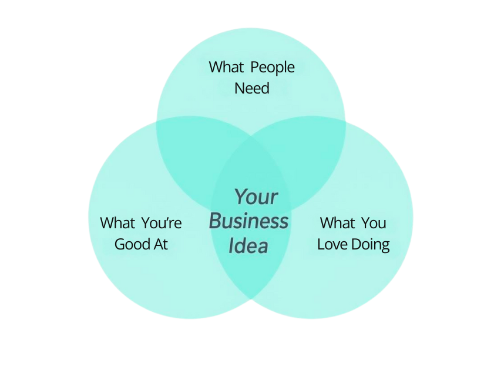
Step 1: List Your "Effortless" Skills
Write down everything you do that feels easy to you but others find difficult. Include:
Technical skills (coding, design, writing, etc.)
Soft skills (organizing, motivating, problem-solving)
Industry-specific knowledge
Hobbies you've mastered
Step 2: Identify Your Pain Points
What frustrates you? What do you constantly complain about? What makes you think, "Why doesn't someone fix this?"
Congratulations—you just found potential business ideas.
Remember: If it's a pain point for you, it's probably a pain point for thousands (or millions) of others.
Step 3: Check Your Network's "Go-To" List
Ask yourself: What do people always ask me to help them with?
Does your family hit you up to fix their tech problems?
Do friends ask you to plan their events?
Does your network constantly ask for introductions or advice?
These patterns reveal valuable skills—and potential business ideas.