
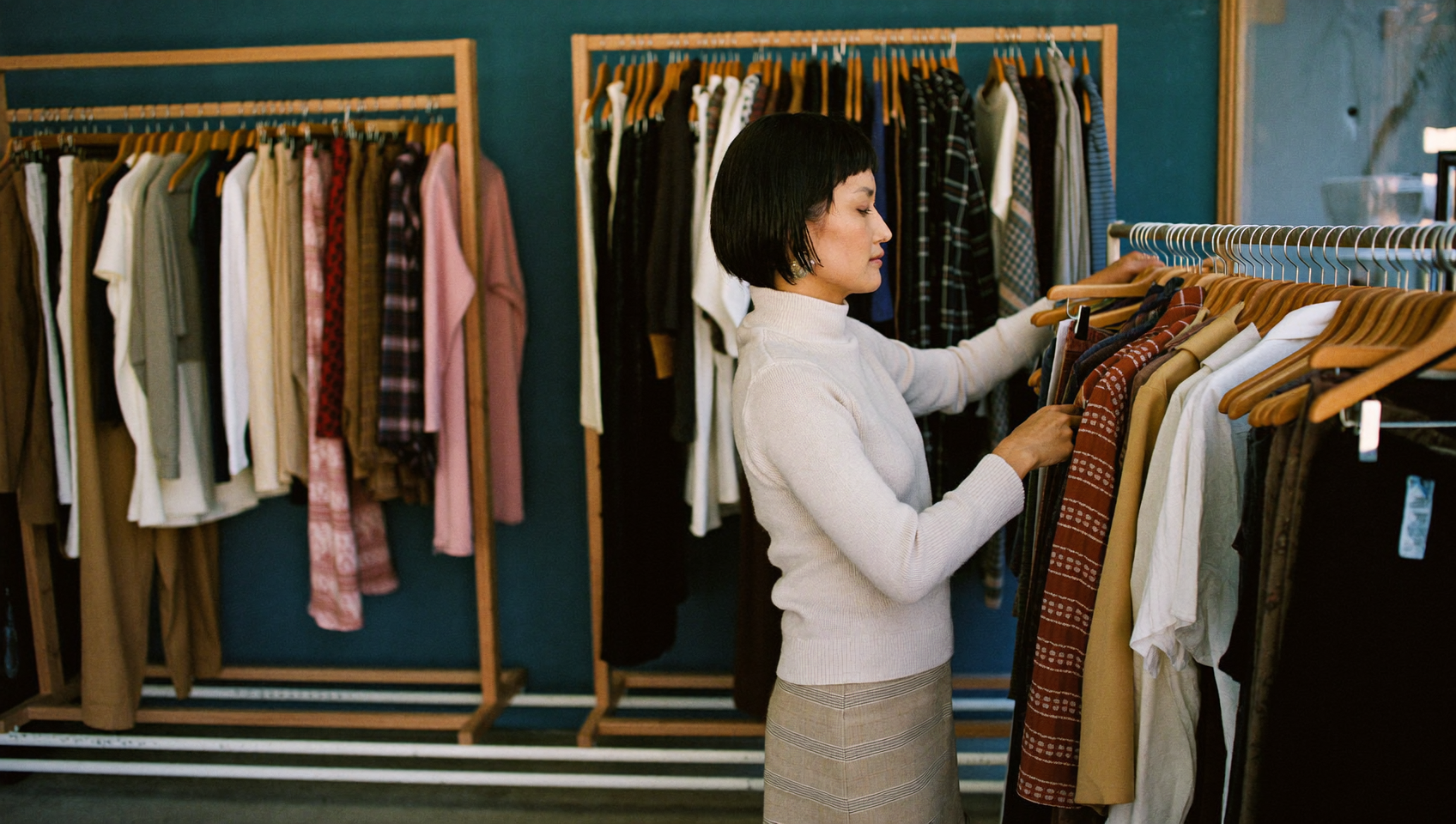
You think starting a vintage business means needing a fashion degree and a huge budget? The truth is, your smartphone and a $50 thrift trip can be all you need to make your first sale. The real challenge isn't money; it's focus. That feeling of walking into a thrift store and seeing endless racks of possibilities can be paralyzing. Do you grab the 70s dress, the 90s jacket, or the Y2K jeans?
Trying to sell "a little of everything" is like being a restaurant with a 20-page menu—it's confusing for customers and impossible for you to master. This is where creating a niche for your vintage brand becomes your secret weapon. Being a "70s rock tee" shop is like being the best taco truck in town; people know exactly what you offer and seek you out for your expertise.
A niche also makes your sourcing trips faster and more profitable. Instead of aimlessly digging, you become an expert hunter. Consider starting with one of these proven niches:
90s Sportswear & Streetwear
70s Bohemian & Gunne Sax
80s Power-Dressing & Formalwear
Classic Rock & Band Tees
Designer Denim Through the Decades
Where to Find Great Vintage Clothes (Without Breaking the Bank)
With your niche in mind, the real fun begins: the hunt. Your journey will likely start at local thrift stores and weekend flea markets. These places are your training ground, perfect for developing your eye and finding those first few pieces without spending a lot of money. Don't be discouraged if you leave empty-handed sometimes; consistency is what uncovers the hidden gems.
As you dig, train your eyes to become a quick quality inspector. Every potential piece needs a fast but thorough check-up under good light. Look at the seams, check under the arms for stains, and hold the fabric up to spot tiny holes. You can save yourself headaches by learning to distinguish a simple, fixable flaw (like a loose button) from a fatal one (like permanently yellowed fabric or large tears).
Once you're comfortable in thrift stores, consider exploring estate sales. Because they can be a time capsule of a specific era, estate sales are goldmines for sourcing vintage fashion from a single decade. You might find a closet full of 70s dresses or 80s blouses all at once, giving your shop instant focus and depth.
The Un-Glamorous Part: Simple Cleaning and Mending You Can Do at Home
That dusty blazer or slightly musty dress you found is an opportunity in disguise. Before you do anything else, the first step is a good, safe cleaning. For durable fabrics like cotton, linen, and polyester, a long, gentle soak in a bucket of water with an oxygen-based cleaner works wonders on yellowing and old smells. Always be cautious with delicate materials like silk, wool, or rayon, which often require gentler hand-washing or professional care.
Beyond cleaning, learning to do a few basic repairs will dramatically increase the number of items you can save and sell. The most valuable five-minute skill you can learn is how to sew on a button. It's the simple difference between an "almost perfect" blouse and a finished, ready-to-wear piece that can command a higher price.
Your job is to be an honest storyteller, which is where a simple vintage clothing condition guide comes in. Think of it in four levels: Mint (perfect, like it was never worn), Excellent (worn but with no flaws), Good (a few minor, noted issues like a tiny pinhole), and As-is (has significant flaws but is still desirable). Being transparent about an item's condition builds incredible trust with buyers.
How to Photograph Vintage Clothes to Make People Click 'Buy'
You don't need a fancy camera or a professional studio to create beautiful product photos. Your most powerful tool is probably in your pocket right now: your smartphone. The secret ingredient isn't expensive gear; it's natural lighting. Find a spot in your home near a window with indirect sunlight—direct sun can create harsh shadows and wash out colors. A clean, neutral-colored wall or a simple patch of wood floor is the perfect backdrop.
Your 3 Must-Have Shots:
The Full View: A clear, straight-on shot of the entire item, either on a simple hanger or in a flat lay.
The Detail Close-Up: Zoom in on the tag, the fabric pattern, unique buttons, or any special embroidery.
The Back Shot: Show the back of the garment so buyers can see the full picture.
With these clear, well-lit photos, you're not just showing a piece of clothing; you're showing its quality and telling its story.
How to Price Vintage Clothing for Profit (A Simple Formula)
The basic framework for how to price vintage clothing is: Item Cost + Your Time + Platform Fees + Profit = Listing Price. This ensures you're not just breaking even, but actually building a business where your effort pays off.
Let's break that down with an example. Say you found a great 90s band t-shirt for $10 (your Item Cost). You then spent an hour cleaning, steaming, and photographing it. Your time is valuable, so pay yourself for that work—let's say $15 (Your Time).
But how do you know what a fair profit is? The answer lies in checking "comps" (comparable sales). Go to the platform where you plan to sell and search for your item. The key is to filter the results to see what similar items have already sold for, not just what they're listed at. If similar shirts sold for around $75, you can confidently set your profit to build toward that price.
Etsy vs. Depop: Where Should You Actually Sell Your Stuff?
The debate of Etsy vs Depop for selling vintage really comes down to who you want to sell to. Think of Etsy as a destination for searchers—buyers often arrive looking for a specific item, like a "1970s Gunne Sax dress" or a "vintage leather bomber jacket." They value craftsmanship, history, and detailed descriptions. Depop, on the other hand, functions more like a trendy social media feed where younger shoppers browse for inspiration.
That delicate 1950s blouse or a timeless wool peacoat will likely find an appreciative home on Etsy. Meanwhile, that perfectly faded band tee, an oversized 90s windbreaker, or a pair of low-rise jeans will probably get more eyeballs and a quicker sale on Depop.
Our advice is simple: pick one platform and master it first. Trying to learn two different systems for listing, shipping, and messaging can lead to burnout before you even gain momentum.
The Business Side: You're Already a Sole Proprietor (and Other Simple Truths)
The moment you make that first sale, you've unofficially become a business owner. In most places, this makes you a "sole proprietor" by default—no scary paperwork required. It's simply a term for an individual running their own show, turning a passion into profit.
Of course, being a business means knowing if you're actually making money. Start a simple spreadsheet from day one. All you need are a few columns: what the item is, what you paid for it, the date it sold, the sale price, and any platform fees. The final column shows your actual profit on each piece.
Your First Sale is Closer Than You Think
Starting a vintage fashion business isn't a secret reserved for those with a fashion degree or a huge budget. It's about following a clear process, one step at a time: find your niche, source your first items, clean them up, take simple photos, price them with a formula, and list them on one platform. Each small action builds on the last, turning a passion for cool old clothes into a real business.
If you're feeling that mix of excitement and overwhelm, that's a good sign—it means you're ready to start. To help turn that feeling into momentum, we created the the free Builder Type quiz. It's a guided program designed to get you from idea to first sale, fast. Stop wondering and start building. Visit buildthedamnthing.com to learn more about the next the free Builder Type quiz.