
How to Start a Mobile Bar Business in 2026
A mobile bar is one of the few businesses you can start with a cart and a Saturday, and get paid for the same month. Most people are operating for somewhere between $2,000 and $5,000, and charging $795 to $3,000 an event. Whether it's worth doing comes down to three decisions, and they're all below.
Is a mobile bar business right for you?
It suits you if you like people at their happiest and you don't mind working while everyone else is off.
You don't need a hospitality background. Most of the people doing this well came from somewhere else entirely, and what carried over wasn't bartending, it was being organized under pressure. If you're the friend who runs the group trip, who knows where the cooler is and what time the ice needs buying, you already have the hard part.
It suits you if you have weekends. Not some weekends. The good months are packed and the calendar is not negotiable, because a wedding does not move for you.
It suits you if you like being the host. You are on camera all night. Nobody wants a bartender who looks like they're counting down.
Walk away if you need income on a Tuesday. This business pays in clusters, tied to the season, and the gap between bookings is real.
Walk away if the loading is the part you're dreading. It's most of the job.
And walk away if you want something that runs without you. It can get there, once you're staffing bartenders instead of pouring, but that is a year or two in, not month one.
On the money, since it's the question underneath the question: owners commonly report somewhere between $52,000 and $260,000 a year, and that spread isn't a mystery. It's how many weekends you work, what you charge for them, and whether you ever get paid on a Wednesday. The low end is a good side business. The high end is a full calendar, a second bar, and someone else pouring.
The year is also lopsided, and nobody mentions it. Spring through October carries most of it in most of the country. If you go into a winter without having priced for it, the quiet months feel like failure when they're just January.
What running a mobile bar actually looks like
A booked Saturday starts at nine in the morning and ends after midnight, and almost none of it is pouring drinks.
You load. Bar, glassware, coolers, the crate of things you only need twice a year. You buy ice, then more ice, because everyone underbuys ice. You drive out to a venue you've never seen, find that the power is further away than the coordinator said, and set up two hours before the first guest arrives.
Then four hours of the actual work, which is fast and social and genuinely fun, and which is the part everyone pictures when they picture this business.
Then you break it down while the party is still going, load out in the dark, drive home, and leave everything in the van because you're not doing it now. Sunday is washing, restocking and answering the three inquiries that came in while your phone was face down.
The second booking is easier than the first, and the fifth is easier than the second, because most of what makes this hard the first time is simply not knowing what you forgot. By your third event you have a list, a rhythm, and a crate packed the same way every time. The day stops being frightening and starts being work.
This is a logistics business wearing a hospitality costume. The people who last are the ones who make peace with that early.
The three decisions that decide whether this works
Everything else is detail. These three set your licensing, your costs and your calendar, and getting one wrong is what makes the difference between a business and an expensive trailer.
Who owns the alcohol?
Dry hire means the client buys the alcohol and you provide the bar, the staff and the service. Wet hire means you sell the drinks. That single choice decides whether you need a liquor license, what your insurance costs, what you can charge, and how much of what you charge you keep.
Most people start dry, because it's faster to be legal and you're selling labor rather than inventory. Some markets expect wet and you'll lose bookings without it. This is the first thing to settle and the most expensive thing to guess at.
The venue often has an opinion too. Plenty of them hand you a list of approved vendors that quietly settles the question for you. Ask before you buy anything, not after.
What do you buy first?
The honest answer for almost everyone is: as little as possible, for as long as possible. A portable bar and rented gear will get you through your first few events, and those events tell you what to buy.
The trailer is the dream, and it's also how people end up with twenty thousand dollars of business in a driveway and no bookings. Equipment does not create demand. It only makes fulfilling demand nicer.
Who are you actually selling to?
Weddings and corporate events look like the same business and they are not. Weddings fill your weekends, pay well, and end in October in most of the country. Corporate pays more per hour, books midweek, and repeats without you having to find a new client every time.
Most people build toward a mix, but you can't market to both at once when you're starting, and picking one changes your pricing, your photos and where you spend your first hundred dollars of effort.
There's a third option people miss, which is private parties. Birthdays, anniversaries, graduations, the backyard fortieth. Smaller budgets, far less competition, and they book on three weeks' notice instead of eighteen months, which matters a great deal when you're trying to prove this works before the summer ends.
Run your three decisions with real numbers
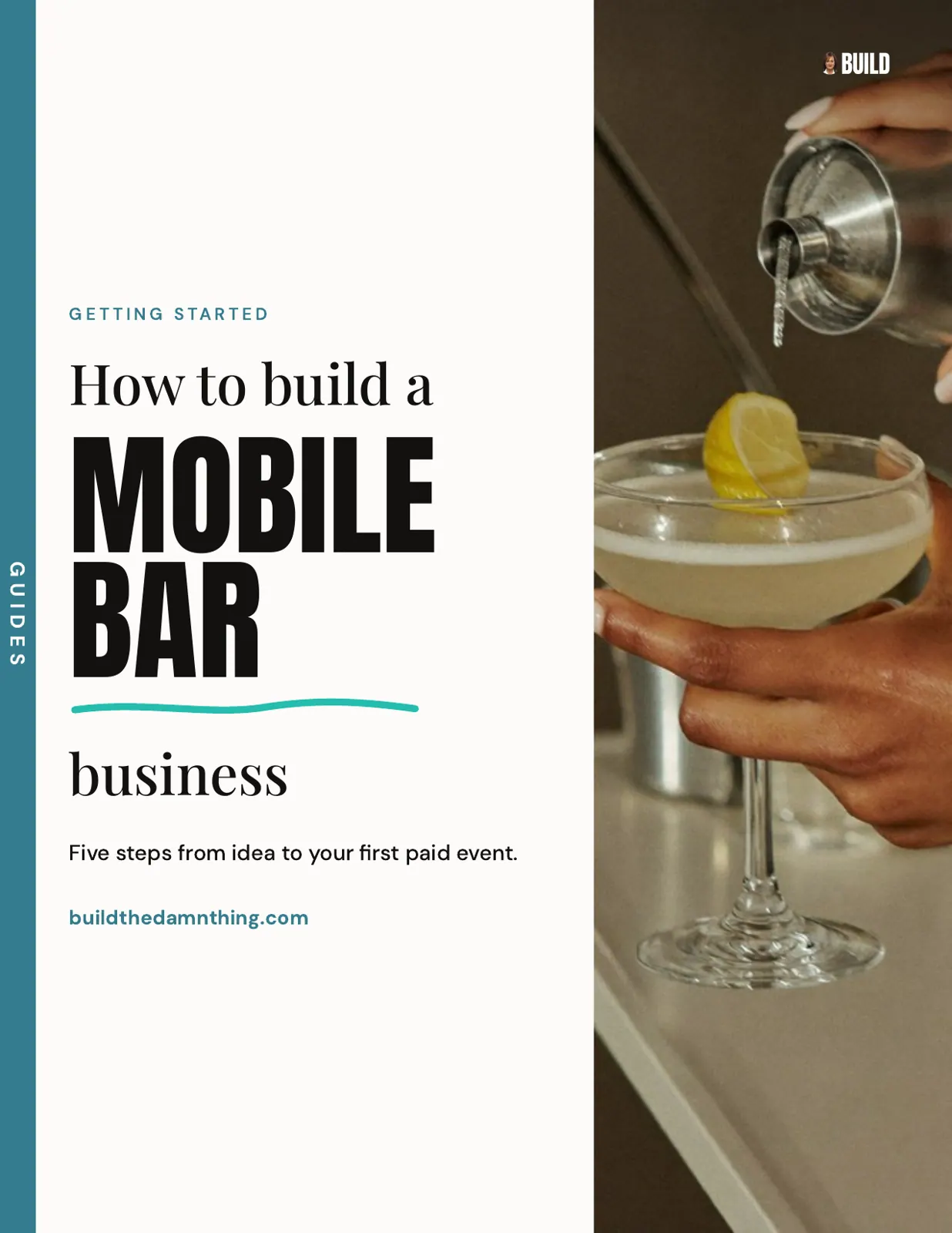
The guide walks you through the licensing choice, the equipment call and the market pick, with the pricing worksheet to check your answer.
How people lose money running a mobile bar
Almost never on the drinks. Here's where it actually goes.
Charging by the hour. An hourly rate pays you for pouring and nothing for the nine hours around it. Flat packages hold your margin because they price the whole day.
Buying the build-out first. See above. The trailer should be paid for by bookings you already have, not the other way round.
Finding out about insurance from the venue. General liability, plus liquor liability if you touch alcohol. Venues ask for a certificate, and the ones that don't ask are the ones you should worry about.
Driving too far for the money. A booking two hours away eats a whole day and a tank of fuel, and it always looks worth it until you're loading out at one in the morning.
Not charging for setup. Two hours before and an hour after is three hours of your life, every single event. If it isn't in the price, you're working for free and calling it marketing.
Saying yes to everything in year one. The event that's too big, too far or too complicated is the one that costs you a review, a night's sleep, and sometimes actual money. Turning work down feels insane when you're starting. Do it anyway.
What ready looks like
Ready is not a full trailer and a logo. Ready looks like this.
You have one weekend a month free for the next six months, and you've actually checked.
You can float a couple of thousand you don't need back next month.
You have one person who'll load in with you, and you've asked them.
You've been to an event in the last year and thought, quietly, that you could run that bar better than whoever was running it.
You're willing to be told no. The first ten inquiries you send won't all convert, and the ones that don't aren't a verdict on you. They're the price of finding the three that do.
That's it. That's the list. The rest is a decision, then a first booking, then a real business.
Find your state's liquor license rules
Alcohol licensing is run state by state, and your city or county usually adds its own permit on top. Find your state, start there, then confirm locally for every place you serve.
| State | Agency | Where to start | Type |
|---|---|---|---|
| Alabama | Alcoholic Beverage Control Board | Official site | Control |
| Alaska | Alcohol & Marijuana Control Office | Official site | License |
| Arizona | Dept. of Liquor Licenses & Control | Official site | License |
| Arkansas | Alcoholic Beverage Control Division | Official site | License |
| California | Dept. of Alcoholic Beverage Control | Official site | License |
| Colorado | Liquor Enforcement Division | Official site | License |
| Connecticut | DCP Liquor Control Division | Official site | License |
| Delaware | Office of Alcoholic Beverage Control Commissioner | Official site | License |
| District of Columbia | Alcoholic Beverage & Cannabis Administration | Official site | License |
| Florida | Division of Alcoholic Beverages & Tobacco | Official site | License |
| Georgia | Dept. of Revenue, Alcohol & Tobacco | Official site | License |
| Hawaii | County Liquor Commissions (e.g. Honolulu) | Official site | License (county) |
| Idaho | Idaho State Police, Alcohol Beverage Control | Official site | Control |
| Illinois | Liquor Control Commission | Official site | License |
| Indiana | Alcohol & Tobacco Commission | Official site | License |
| Iowa | Alcoholic Beverages Division | Official site | Control |
| Kansas | Division of Alcoholic Beverage Control | Official site | License |
| Kentucky | Dept. of Alcoholic Beverage Control | Official site | License |
| Louisiana | Office of Alcohol & Tobacco Control | Official site | License |
| Maine | Bureau of Alcoholic Beverages & Lottery Operations | Official site | Control |
| Maryland | Alcohol, Tobacco, & Cannabis Commission | Official site | License (county) |
| Massachusetts | Alcoholic Beverages Control Commission | Official site | License |
| Michigan | Liquor Control Commission | Official site | Control |
| Minnesota | Alcohol & Gambling Enforcement Division | Official site | License |
| Mississippi | Dept. of Revenue, Alcoholic Beverage Control | Official site | Control |
| Missouri | Division of Alcohol & Tobacco Control | Official site | License |
| Montana | Dept. of Revenue, Cannabis & Alcohol Regulation | Official site | Control |
| Nebraska | Liquor Control Commission | Official site | License |
| Nevada | Dept. of Taxation (local issue retail) | Official site | License (local) |
| New Hampshire | Liquor Commission, Enforcement & Licensing | Official site | Control |
| New Jersey | Division of Alcoholic Beverage Control | Official site | License |
| New Mexico | Alcoholic Beverage Control Division | Official site | License |
| New York | State Liquor Authority | Official site | License |
| North Carolina | ABC Commission | Official site | Control |
| North Dakota | Attorney General, Licensing Division | Official site | License |
| Ohio | Division of Liquor Control | Official site | Control |
| Oklahoma | ABLE Commission | Official site | License |
| Oregon | Liquor & Cannabis Commission | Official site | Control |
| Pennsylvania | Liquor Control Board | Official site | Control |
| Rhode Island | Dept. of Business Regulation, Liquor Enforcement | Official site | License |
| South Carolina | Dept. of Revenue, Alcohol Beverage Licensing | Official site | License |
| South Dakota | Dept. of Revenue, Alcohol | Official site | License |
| Tennessee | Alcoholic Beverage Commission | Official site | License |
| Texas | Alcoholic Beverage Commission | Official site | License |
| Utah | Dept. of Alcoholic Beverage Services | Official site | Control |
| Vermont | Dept. of Liquor & Lottery, Liquor Control | Official site | Control |
| Virginia | Alcoholic Beverage Control Authority | Official site | Control |
| Washington | State Liquor & Cannabis Board | Official site | License |
| West Virginia | Alcohol Beverage Control Administration | Official site | Control |
| Wisconsin | Dept. of Revenue, Alcohol Beverage | Official site | License (municipal) |
| Wyoming | Dept. of Revenue, Liquor Division | Official site | Control |
Control states run alcohol sales themselves. License states issue a license to you. Local-issue states (Hawaii, Nevada, Maryland, New Jersey, Wisconsin) route you to a county or city authority. Always confirm with your city or county too.
Frequently asked questions
How much does it cost to start a mobile bar business?
Most people are operating for somewhere between $2,000 and $5,000, and a built-out trailer costs considerably more. Where you land inside that comes down to whether you rent or buy, and whether you're selling the alcohol or just serving it. The guide has the cost worksheet to run your own number.
Do I need a liquor license?
It depends on who owns the alcohol. Dry hire, where the client buys it, usually doesn't need one. Wet hire, where you sell it, needs a state license and often a local permit on top. The rules are set state by state, and your city can add its own. Start with the table above, then confirm locally for every place you serve.
How much money can a mobile bar make?
Owners commonly report somewhere between $52,000 and $260,000 a year. That spread comes down to how many weekends you work, what you charge for them, and whether you ever book midweek. There are no guarantees, and in most of the country the year is seasonal.
Is a mobile bar business actually profitable?
It can be, and the margin depends almost entirely on your model. Selling your service keeps more of what you charge than selling drinks does. Pricing in flat packages rather than by the hour is what protects it. The guide has the pricing and margin worksheet.
Do I need bartending experience?
No. Most of the people doing this well came from somewhere else entirely. Being organized under pressure matters more than anything you'd learn behind a bar, and you can hire bartenders for the pouring once the bookings are there.
What should I buy first?
As little as possible. Rent or borrow for your first few events and let the bookings tell you what to buy. The trailer is the thing people buy too early and regret, and the guide's equipment plan is built around buying in that order.
Real pages, not stock previews


The mobile bar guide
You've made the decisions. This is the how: the licensing walk-through, the pricing worksheet, the booking scripts and the launch checklist.
- The licensing walk-through
- The pricing worksheet
- The booking scripts
- The launch checklist
Instant download. Updated for 2026, free updates included. Free for BUILD members.
When you are ready to build, not just read, BUILD takes you from the idea in your head to a real product you can sell.