
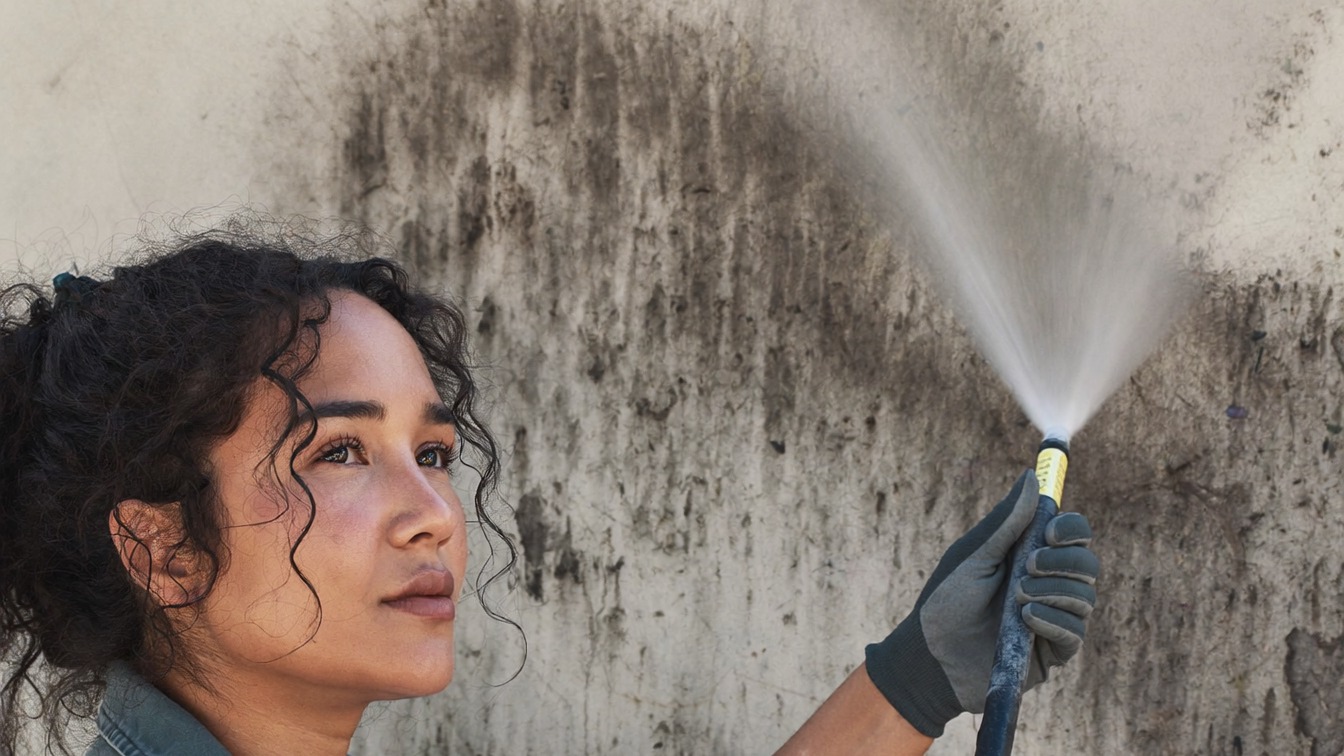
Here's what a pressure washing business really is, what it costs, and how to get started. The full playbook, with the exact numbers, is in the guide below.
Key facts
- Startup, scrappy: roughly $500 to $3,000 for an entry setup you can work with today.
- Startup, built out: roughly $6,000 to $50,000 once you add a commercial machine, a trailer or van, insurance, and registration.
- What a job pays: $170 to $360 to wash a typical house, $50 to $200 an hour.
- Licensing: no national license, but your city or county controls where the dirty water goes.
What is a pressure washing business
You clean things that are outside and filthy, and people pay you because they don't want to do it. Driveways, siding, decks, patios, fences, gutters, roofs, dumpster pads, storefronts. The equipment is a machine, a hose, and a way to get there. The business is everything around it.
Three ways to run it, and the one you pick decides almost everything else.
Residential flatwork. Driveways, walkways, patios, decks. The fastest to start, the easiest to sell, and the cheapest to enter. One neighborhood on a Saturday can produce three jobs, because your work is sitting in a driveway where everyone can see it. Homeowners pay $155 to $190 to have a driveway done, or $0.25 to $0.35 a square foot (HomeGuide).
Soft washing. Roofs and siding, done with low pressure and detergent instead of force, because 3,000 PSI on a shingle roof is how you buy someone a new roof. It pays more per job, and it takes real knowledge about surfaces and chemicals. Good second service, risky first one.
Commercial and recurring. Restaurants, gas stations, HOAs, property managers, dumpster pads, sidewalks, fleets. Less glamorous, often at 5am, and the only version of this business that produces the same money next month without you finding a new customer, which is the difference between a job and a business. Once you're there, read how to price a recurring service, because recurring work gets priced differently and that's where people give away their margin.
What you need to start
A machine that fits the work, a surface cleaner attachment, water, a way to haul it, general liability insurance, and business registration. That's the real list. Gallons per minute does more of the actual cleaning than pressure does, which is the opposite of what the number on the box wants you to believe (Simpson Cleaning), and the surface cleaner, the round attachment that looks like a floor buffer, is the difference between finishing a driveway in 40 minutes or in three hours with stripes in it.
The one item that isn't optional: general liability insurance, $40 to $200 a month. You're pointing a high-pressure hose at other people's property.
What you actually spend ranges from a few hundred dollars, using a rental machine and the truck you already own, up to $50,000 for a trailer-mounted commercial rig, and the gap between those two numbers is the real decision you're making. The guide breaks it into three exact budgets and tells you what to skip at each one.
What it costs and how much money you can make
Start scrappy and you're working for a few hundred to a few thousand dollars (ProjectionHub puts the floor at $500), using the truck you already own and the customer's water. Start built out, meaning a commercial machine, a trailer or van, insurance, and a real marketing budget, and you're at $6,000 to $50,000 (ZenBusiness).
Worth saying plainly: the sources disagree, and it isn't a mistake. They're describing two different businesses. One is a person with a machine in a pickup truck. The other is a company with a wrapped trailer. Both are real, they just start on different days.
What the work pays. A house wash runs $170 to $360, with most homeowners paying around $265 (HomeGuide). Hourly, pressure washing runs $50 to $200, with most jobs landing at $130 to $160 an hour.
Whether that adds up to a business or a hobby comes down to your cost per job against your market's price. That's the actual math, filled in line by line with a worked example, in the guide. If you can't say what your margin is on a job you did last week, you're working, not running a company.
What to do next
Sell one job before you buy anything. Not a flyer, not a logo, not a name. One person paying you a real price to clean one real thing. Rent a machine for a day for less than a tank of gas and find out in one Saturday whether you can sell this.
Quick win: post one before-and-after photo of your own driveway in your neighborhood group with a price on it.
Trap: buying the trailer first. The trailer is a reward, not a requirement.
Find out where your wash water can legally go. Federal law under the Clean Water Act sets the frame, but the rules you'll actually be held to are your city's and your county's. The short version most local programs land on: not the storm drain, ever. Call your local stormwater or public works office and your sewer authority, ask what they allow, and write it down.
Quick win: two phone calls, and you know more than most of your competitors.
Trap: assuming that because it's "just water," nobody cares. Regulators treat anything that ran off a work surface as process water.
Price one real job all the way through. Take one job at your market rate, subtract fuel, chemical, water, insurance, and the self-employment tax you'll owe on it, 15.3% before income tax (IRS). Then divide what's left by the hours you actually spent.
Quick win: do this once and your prices will change by Friday.
Trap: pricing off what the guy on Facebook charges. He may be losing money faster than you.
Find your state's registration rules, and your city's water rules
Pressure washing has no national license. Two calls settle almost everything.
Register the business. The SBA keeps a state-by-state lookup: sba.gov/business-guide/launch-your-business/register-your-business. Registration runs $50 to $500 depending on the state, and your city or county usually wants its own license on top of that.
Find out where the water can go. This is local, and it's the part that carries real fines. Call your city or county stormwater office and your sewer authority, and ask what they'll accept. The EPA keeps a state-by-state directory of who to call: epa.gov/npdes/npdes-state-program-authority. The guide has the full 52-state registration appendix and the exact script for that call.
Get the guide
Everything above is the overview. The guide is the how: your equipment list at three real budgets and what to skip, the pricing model with the cost-per-job math filled in, the scripts for selling a driveway, a house wash, and a recurring commercial contract, the wash-water compliance walk-through, and the 52-state registration appendix with your first ten jobs mapped out.
Get the Pressure Washing Business Guide, $49 →
What's next
Two things worth reading before you buy a machine: how to price a recurring service, because commercial contracts are where this business gets stable, and get your first 10 paying customers, because that's the part nobody's equipment solves.
If you want the tools and the people while you do it, BUILD membership starts at $49 a month for the first 100 founders. Become a founding member.
Frequently asked questions
How much does it cost to start a pressure washing business?
A few hundred to a few thousand dollars if you start with an entry-grade machine, a surface cleaner, and the vehicle you already have. Roughly $6,000 to $50,000 if you start with a commercial machine, a trailer or van, insurance, and registration. Both are real starting points, they're just different businesses.
Is a pressure washing business profitable?
It can be, and the margin comes from your cost per job against your market's price. House washes commonly run $170 to $360 and hourly rates land around $130 to $160. What you keep depends on fuel, chemical, insurance, taxes, and how many jobs you can actually sell, which is the hard part. There are no guarantees here.
Do I need a license to pressure wash?
There's no national license. You register the business in your state, usually add a local business license, and carry general liability insurance. The rule that catches people is not a license at all, it's your city's stormwater rules about where the dirty water goes.
Where is the wash water allowed to go?
That's set locally. Most local programs keep it out of the storm drain, since storm drains run to creeks and rivers rather than to a treatment plant. Landscaping and the sanitary sewer are the common allowed routes, often with permission required. Call your city or county stormwater office and your sewer authority and get their answer in writing before your first commercial job.
Pressure washing or soft washing, which should I start with?
Start with flatwork, meaning driveways, patios, and walkways, because it sells fastest and the surfaces are forgiving. Add soft washing for roofs and siding once you understand chemicals and surfaces, since that's where you can do expensive damage.
How do I get my first customers?
Your own driveway, a before-and-after photo, and the neighborhood group. Then the neighbors of every job you do, because your work is visible from the street. The longer answer is in get your first 10 paying customers.